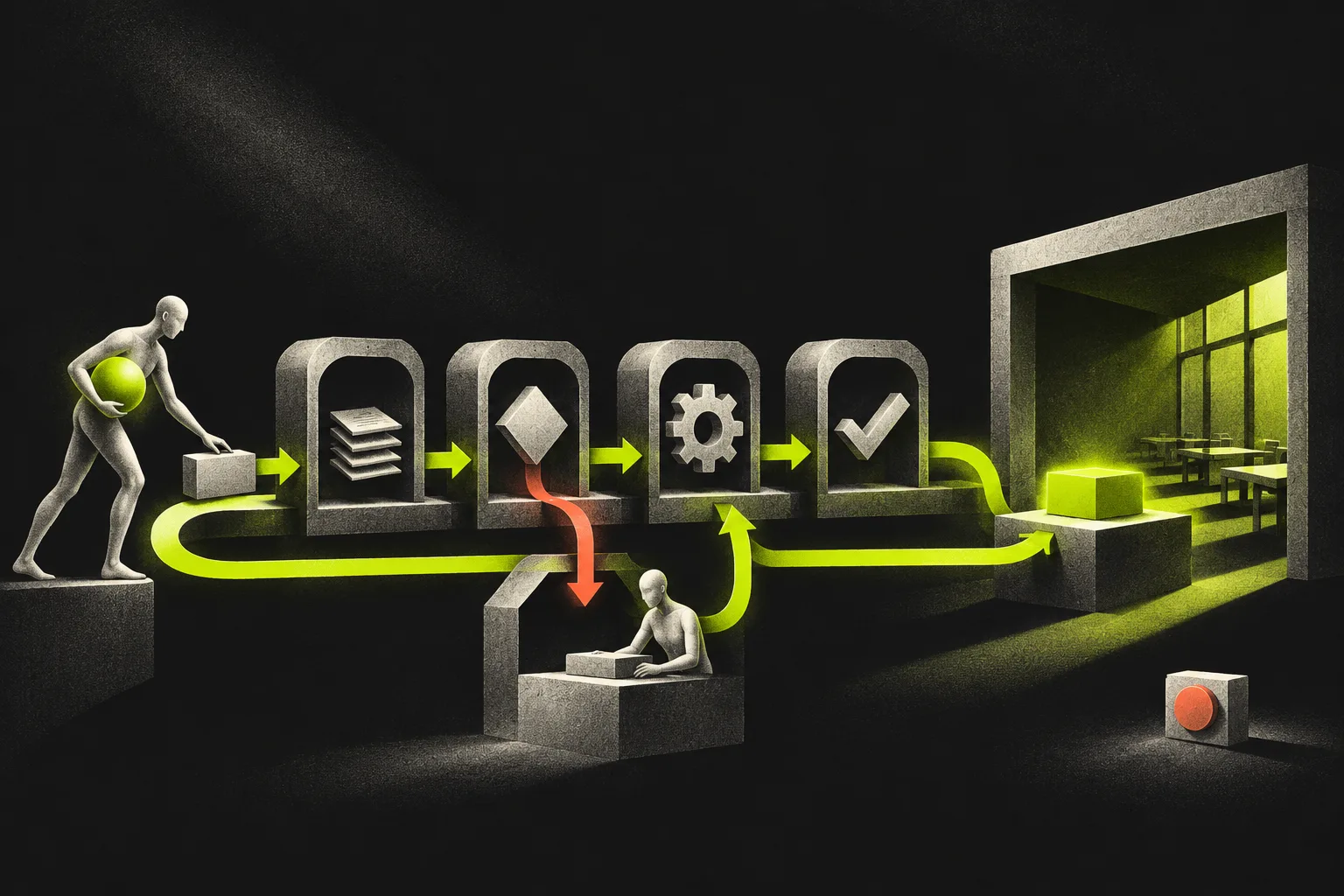
An Agent Finishes the Work; a Chatbot Answers
An assistant waits to be asked, replies, and stops. An agentic system holds a goal and drives work to done inside your real tools. The difference is finished work.
Writing
Most companies do not lack ideas or tools. They lack execution capacity: the hours, people, and attention needed to answer every lead, run every process, and catch every renewal. What is worth buying now is capacity that works on its own, and the proof is whether it is deployed, not whether it demos well.
These notes come from building and running agentic systems: systems that take a goal, act inside live operations with real business tools, and report results you can measure. Each one teaches an idea you can use with or without me.
An assistant waits to be asked, replies, and stops. An agentic system holds a goal and drives work to done inside your real tools. The difference is finished work.
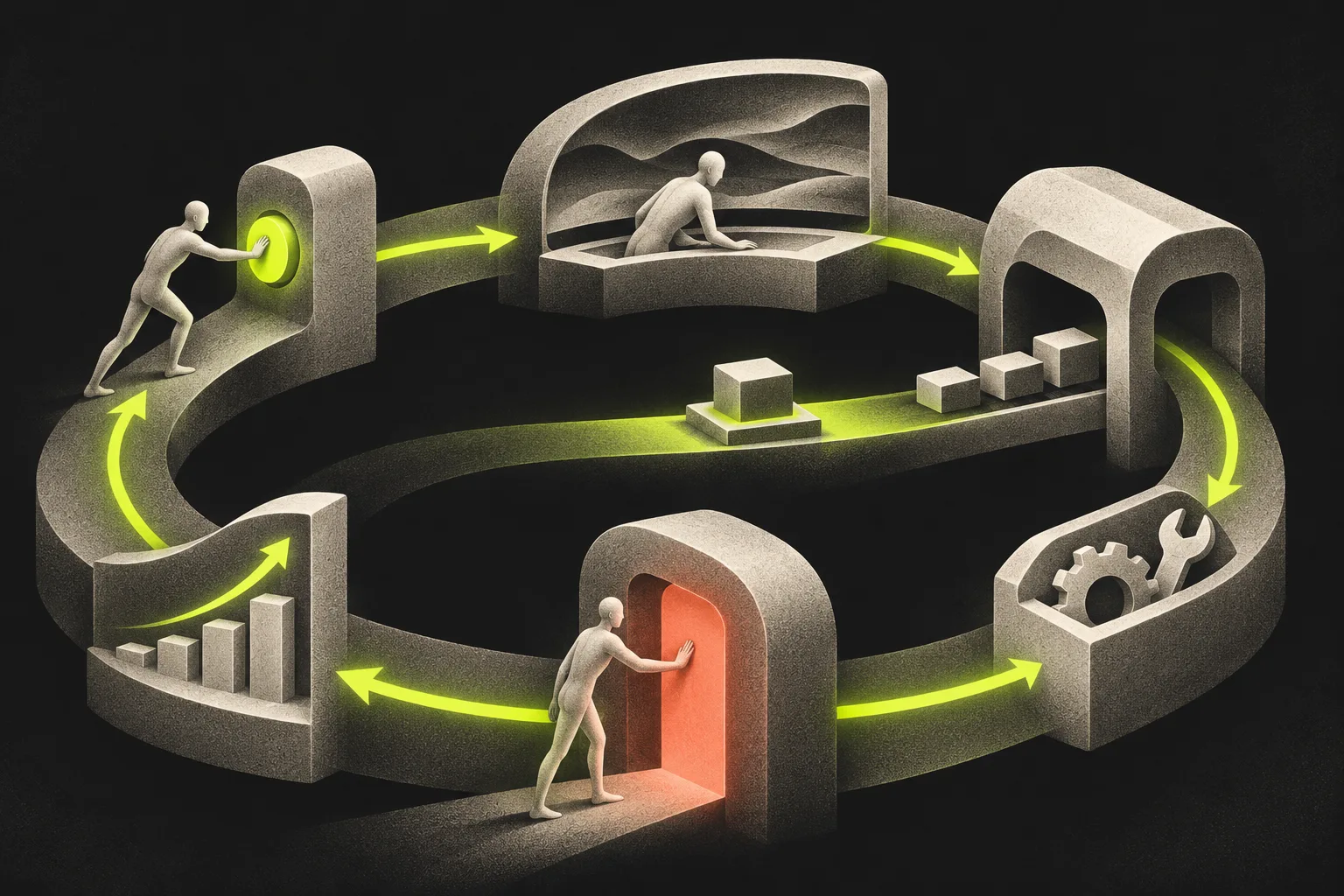
Ask what an agentic system is made of and most answers name the model. The deployed ones are a six-part loop, and five of the parts are not the model.
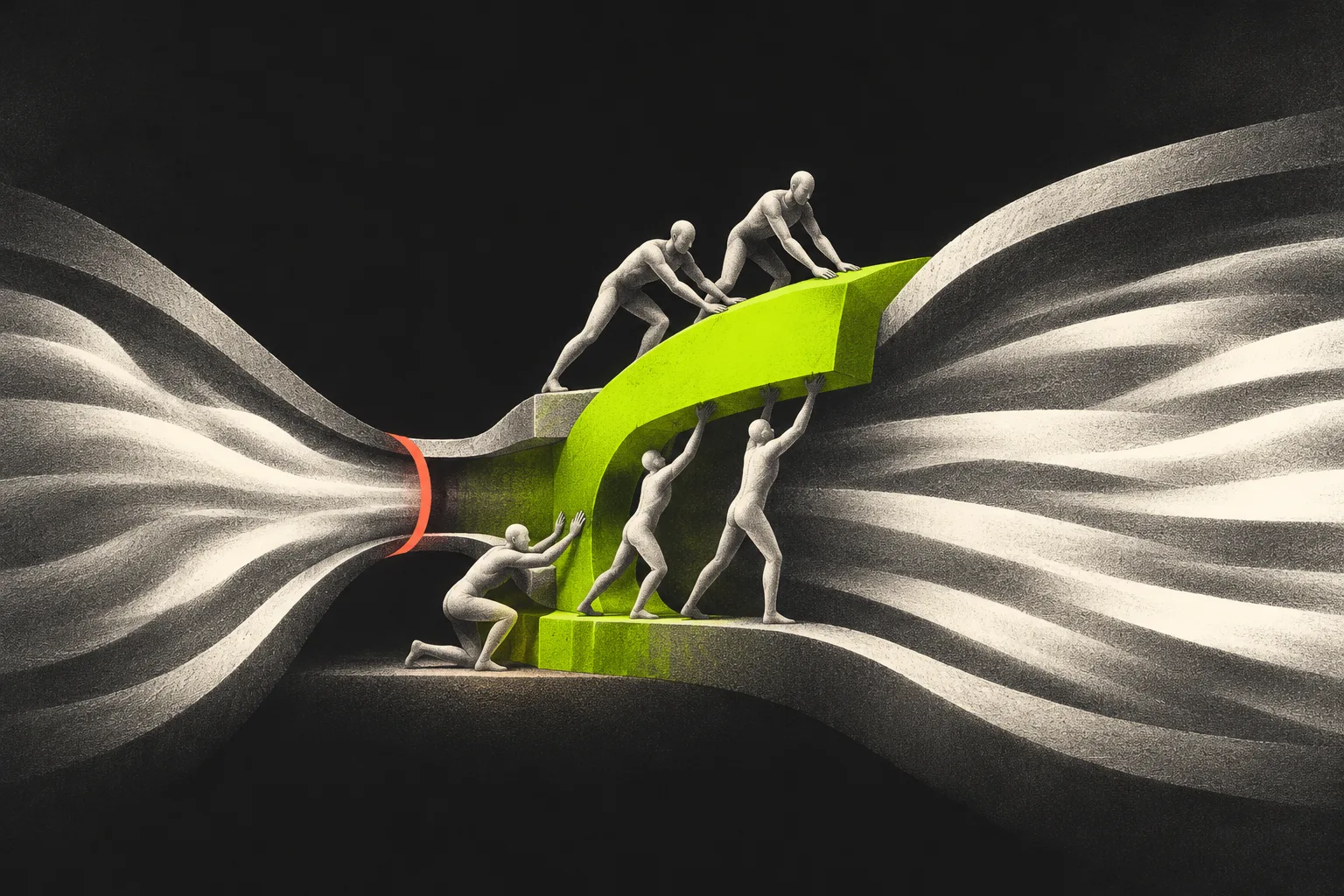
Revenue is demand times capacity times conversion, and capacity is the term nobody planned for. Hiring adds it in lumps; configured systems add it in steps.

The pitch deck promises transformation. The term sheet should ask for something duller: five operating numbers, reported weekly, with logs attached.

Six weeks into a deployment, finance asks where the revenue is. The honest answer is a curve: hours banked first, revenue second, and a rule for the switch.

The controls that let a system act are also the controls that make it trustworthy: scope, gates, audit, evaluation, kill switch. Trust compounds slowly.
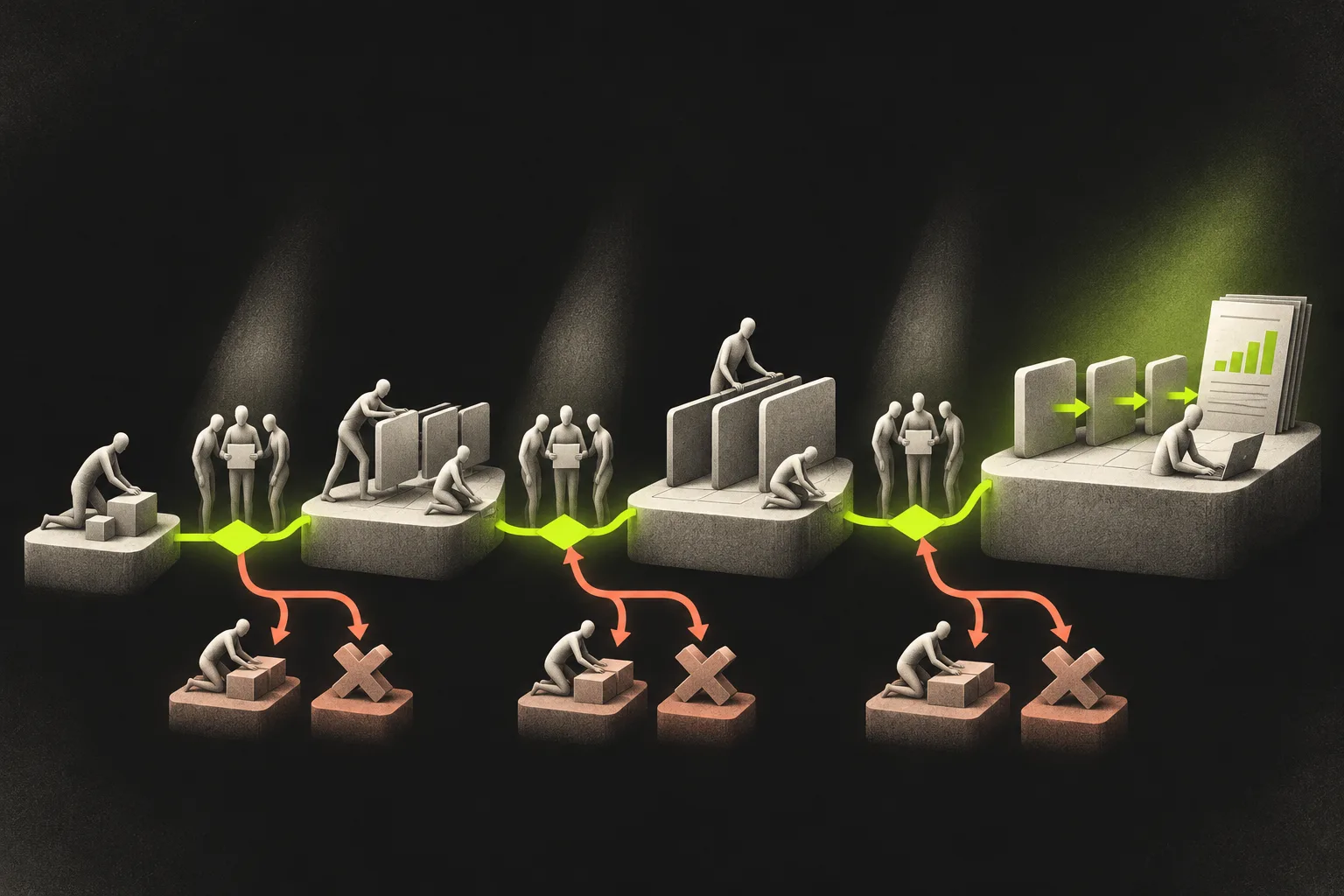
Ninety days is three finance meetings and four decisions you get to make. The four phases of a first deployment, and the gate at the end of each.

Every executive deck now features an agent, and almost none of them run in production. Four questions cut through the demo theater in under five minutes.

The fastest money in agentic systems is not clever wording. It is the reply that took nine hours now taking four minutes, at every stage of the lifecycle.
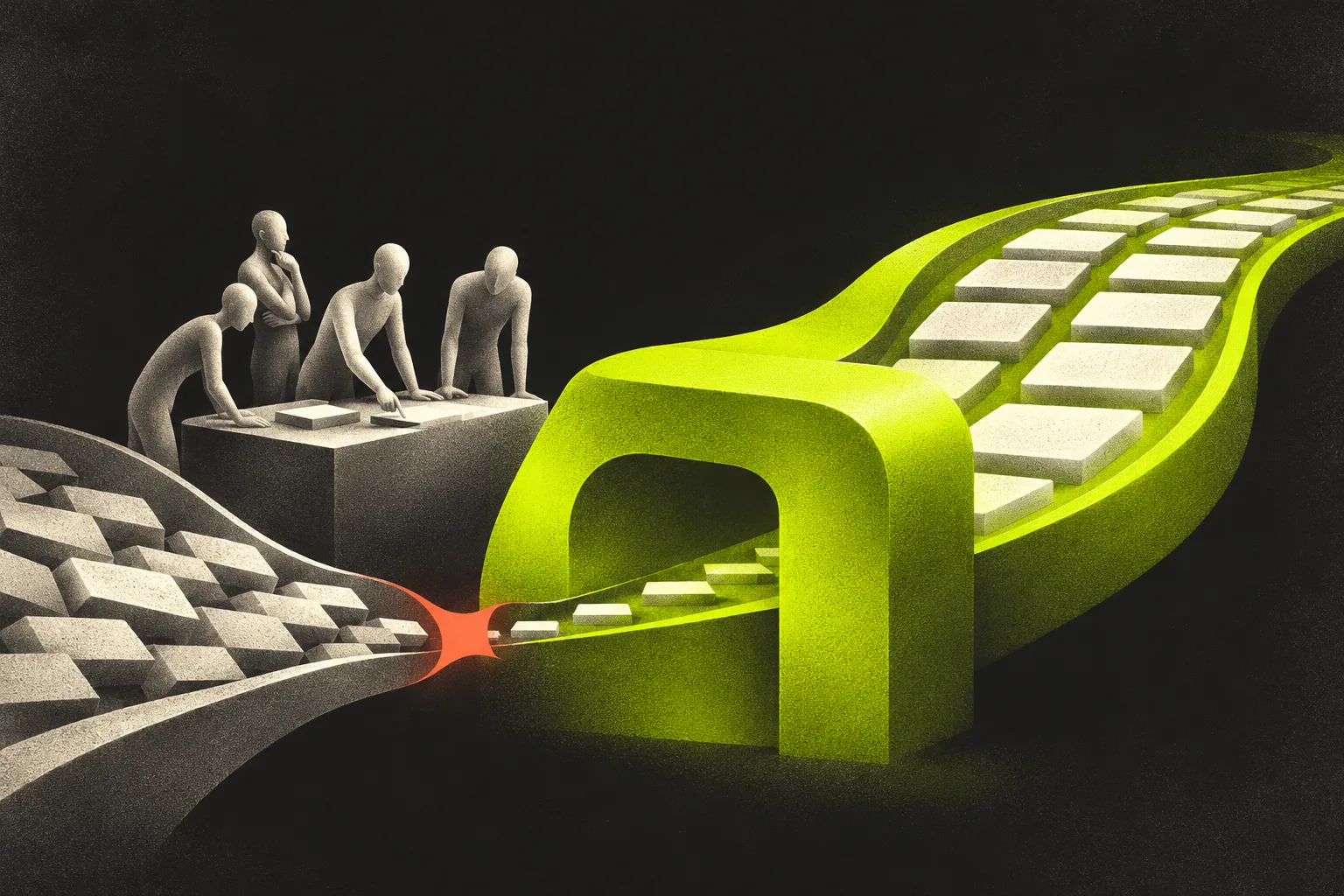
A tool gives you features and asks you to do the work. Capacity does the work. Three tests separate the two purchases, and only the second one compounds.